Wednesday, 9 July 2025

Absence of changeability again


For the next week, we can expect consistent weather forecasts again. Temperatures in the 20s, little rain to speak of, minimal cloud cover, little wind, and lots of sun. They are warning us already that there's to be a shortage of water and many municipalities will be reducing flow. I think we are okay here with our private water scheme, but still, growing stuff without water is not easy. How weird is this?

Think glass bottles are safer than plastic?

 SPARTANSK Water bottle, clear glass/green, 0.5 l

Only if you use corks and not plastic-lined caps, a somewhat counterintuitive finding. This French study finds that contamination with microplastics (MPs) is higher in glass bottles with plastic caps than in plastic bottles. The MPs matched the plastic composition of the caps. The authors suggest that cap abrasion during storage drives contamination. 

What about wine with screw caps that have a plastic liner?  And why do sodas and lemonade have higher content than iced teas, which often also have lemon flavouring. This study raises more questions than it answers. 

Tuesday, 8 July 2025

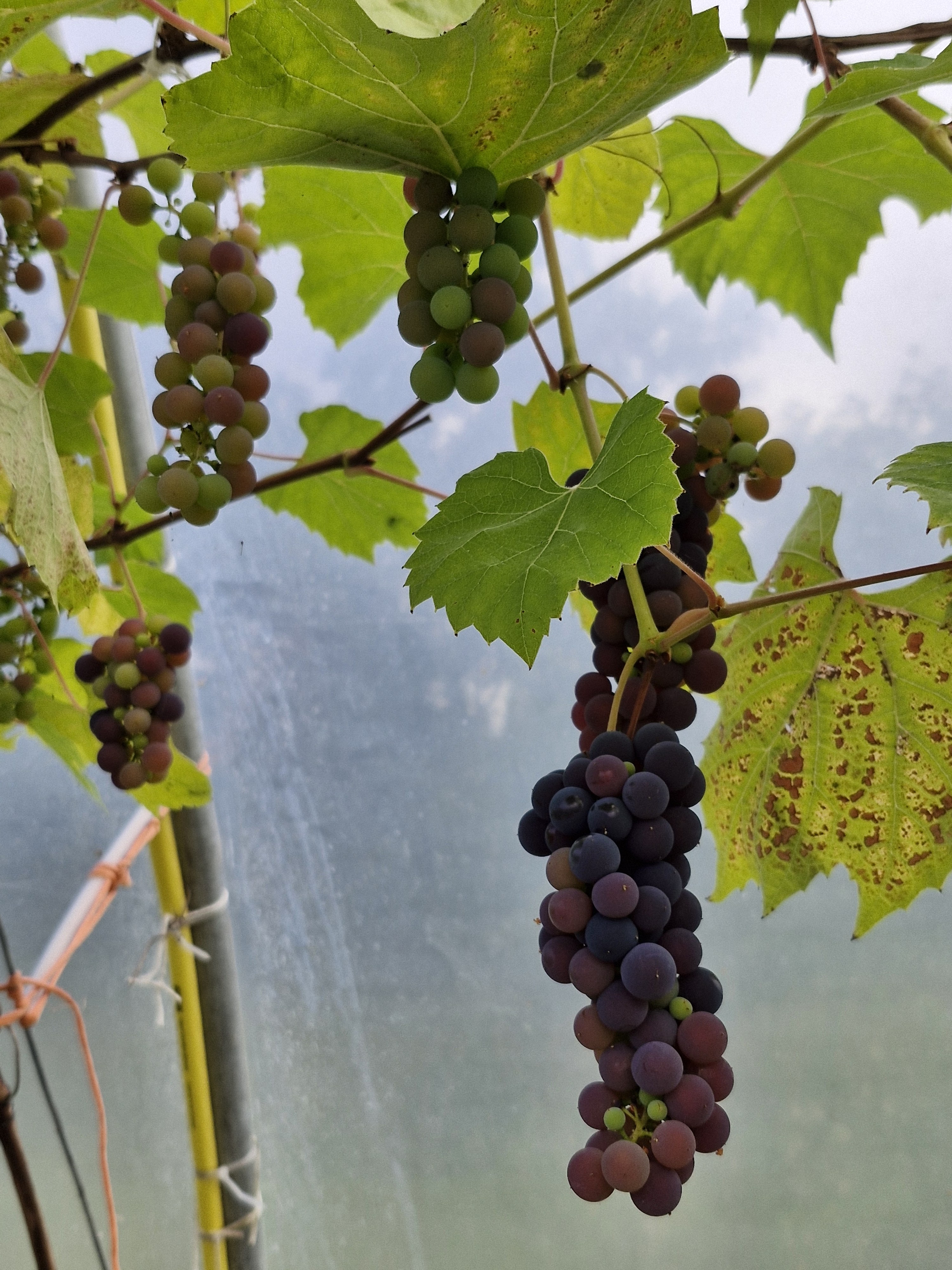
Grapes in the polytunnel


The grapes in the polytunnel are almost ready to pick. They've turned red very quickly since the start of veraison. But curiously, they are not the light red colour that they are in photos online. They are much darker red in colour. Below is what they are supposed to look like. 

Future Forests' photo of Vanessa. 

We also have olives coming in the polytunnel. They are tiny and hard. You are supposed to pick them just as they start turning darker in colour. Sounds like preparing olives so they are edible can be quite honorous,


Saturday, 5 July 2025

Interview with myself


OCC Interviews: Daria Blackwell 2025 

Simon Currin, Past Commodore of the Ocean Cruising Club, interviewed me about my back story and how I got into sailing and serving the OCC. 

Friday, 4 July 2025

A tad windy today


The wind is gusting up over 55 knots out of the SW today. Hopefully, the vineyard will not be suffering any damage. We're supposed to be getting a lot of rain right now, but it's not raining that hard, just blowing stink. 


Europe facing serious drought

Drought has become a regular compound extreme event affecting Europe. This drought has been going since mid-April. An extreme marine heat wave affecting the Mediterranean Sea is no doubt a contributing factor.  The Mediterranean is on fire. A buoy off the coast of Majorca has measured a sea surface temperature of 31ºC in JUNE, the average AUGUST temperature is 26ºC. Temperatures range from 3-7ºC above average across the basin. This marine heatwave is setting new records for what's possible. 

The near-term future for Europe is grim. A strong high pulled scorching Iberian air into France: 39°C in Zaragoza, 38°C Toulouse, 37°C Paris & Lyon. Dry skies, stagnant air trap heat. A textbook Mediterranean heatwave — amplified by Climate Change, raising risks of droughts, wildfires & health stress. This is what scientists were predicting for 2050 not 2025. 

By early January 2025 the Combined Drought Indicator (CDI) shows warning drought conditions in southern Italy, eastern Baltic Sea region, eastern Poland, Greece, Turkey, part of the Balkans, Belarus, central-eastern Ukraine, southern and western Russia, Cyprus, Malta and other Mediterranean islands, as well as Ireland and the UK.  

I'm glad we let our vines grow deep roots for the first few years. They seem to be doing great this year so far. 

Happy 4th of July!


Thursday, 3 July 2025

Cool region Pinot Noir


Despite the heat, it's still relatively cool in Ireland compared to mainland Europe.  I was right to try Pinot Noir, another short-season grape which was made fickle by growing it in warmer regions. If Pinot Noir can do well in Ontario, we should be able to have some success with it in Mayo!

We haven't had a crop of Pinot Noir yet, but when we do, I will treat it delicately. Pinot Noir's success stems from its unique ability to express terroir, its elegant and complex flavour profile, and its versatility in food pairing. The grape is known for its delicate aromas of red fruits, earthiness, and floral notes, as well as its light to medium body and silky tannins. Pinot Noir's popularity also comes from its ability to showcase the characteristics of the vineyard in which it's grown, making each bottle a unique reflection of its origin. While Pinot Noir is prized for its quality, it is also notoriously difficult to grow, requiring specific cool climates and careful vineyard management. 

Pinot Noir thrives in cool to moderate climates with consistent temperatures throughout the growing season. This helps the grapes ripen slowly and develop nuanced flavours, avoiding overly tart characteristics. Wine publications advise that the ideal temperature range for Pinot Noir during the growing season is generally between 55°F and 60°F (13°C to 16°C). Adequate sunshine is needed for proper ripening, but excessive heat can be detrimental. The best Pinot Noir regions often have a balance of sunshine and cool temperatures. 

Ireland's climate, while often wetter and cooler than traditional Pinot Noir regions, falls within the range of what is considered suitable for this grape, especially as temperatures warm due to climate change. The Old Roots Vineyard in Co Wexford has successfully grown Pinot Noir among other varieties.